Quick answer
Common stock usually carries voting rights and an uncapped share of the company's growth. Preferred stock usually has no vote, but its dividends are paid before common dividends, and preferred holders are paid ahead of common holders if the company is liquidated [1].
Key points
- Common shareholders usually vote; preferred shareholders usually do not.
- Preferred dividends are paid before common dividends and are often a fixed amount.
- In a liquidation, bondholders are paid first, then preferred holders, then common holders.
- Preferred prices tend to move less than common prices, and many preferreds can be called back by the issuer.
- With either type, dividends can be cut or skipped and prices can fall.
#What is common stock?
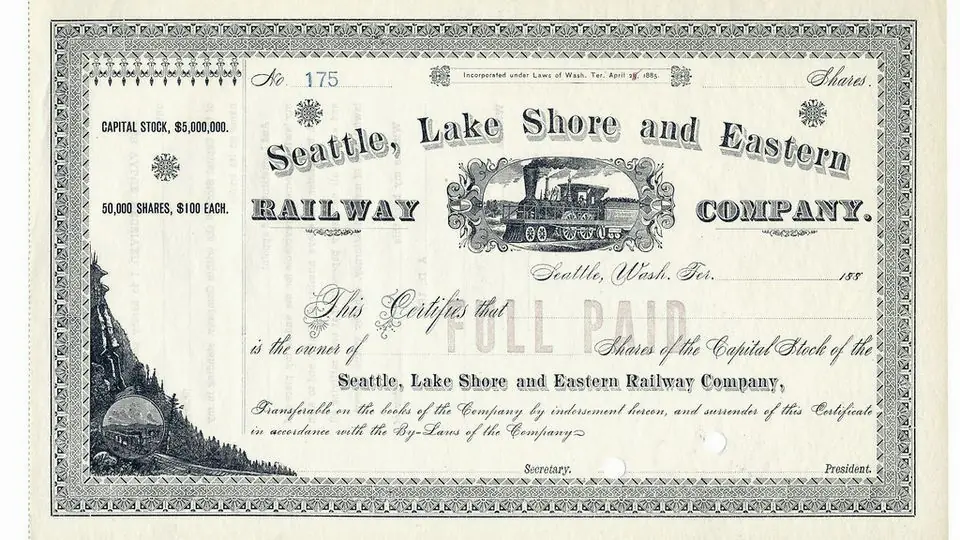
Common stock is the standard form of company ownership and the type most people buy. According to Investor.gov, common stock entitles owners to vote at shareholder meetings and receive dividends [1]. Voting usually covers things like electing the board of directors. If the company grows and its profits rise, common shareholders share in that growth with no fixed ceiling.
The trade-off is that nothing is promised. FINRA notes that a company may pay dividends on common stock but does not have to, and that it can cut the dividend or eliminate it altogether [2]. Common shareholders also stand last in line if the company fails [2]. For the basics of share ownership, start with what a stock is.
#What is preferred stock?
Preferred stock is also ownership, but it is built to behave more like an income investment. Investor.gov explains that preferred stockholders usually do not have voting rights, but they receive dividend payments before common stockholders do and have priority over common stockholders if the company goes bankrupt and its assets are liquidated [1].
FINRA describes the preferred dividend as usually a fixed payment similar to the coupon on a bond, and says preferred prices do not move as much as common stock prices [2]. That stability cuts both ways: preferreds tend to hold up better in downturns but usually do not rise much in strong markets [2]. Because the payment is fixed, preferred prices also tend to fall when interest rates rise and rise when rates fall, much like bonds [3]. Our guide to bond prices and interest rates explains why.
| Feature | Common stock | Preferred stock |
|---|---|---|
| Voting rights | Usually yes | Usually no |
| Dividends | Optional and variable; can be cut or stopped | Usually a fixed amount, paid before common dividends |
| Priority in liquidation | Last, after creditors and preferred holders | Ahead of common holders, behind bondholders |
| Price movement | Can rise or fall a lot | Usually moves less; sensitive to interest rates |
| Upside if the company thrives | Uncapped | Limited; many issues can be called at par |
| Typical appeal | Long-term growth and a say in the company | Income and a higher place in the payout line |
#Who gets paid first if a company fails?
When a company is liquidated, its remaining assets are paid out in a set order. FINRA explains that common stockholders rank below both bondholders and preferred stockholders, and that preferred holders must be paid before common holders but rank below bondholders [2]. In practice, there is often little or nothing left by the time common shareholders are reached.
Worked example
A liquidation payout, step by step
A hypothetical company is wound up with $100 million of assets. It owes $70 million to lenders and bondholders. It has 2 million preferred shares, each with a $25 claim (the par value), and many common shares.
- Assets left after paying debt ($100M − $70M)
- $30 million
- Preferred claim (2,000,000 × $25)
- $50 million
- Paid to preferred holders (all that is left)
- $30 million — 60% of their claim
- Paid to common holders
- $0
- Same company with $150M of assets: left after debt
- $80 million
- Then: preferred paid in full / left for common
- $50 million / $30 million
Preferred holders are ahead of common holders, but they are still behind lenders. Neither group is sure to be repaid in full.
Hypothetical figures, calculated in Python. Real bankruptcies involve legal costs and negotiations that change the outcome.
Who received what in the $100 million liquidation
#What do call and conversion features mean?
Many preferred shares come with extra terms set out in the offering documents. A call provision lets the issuer buy the shares back early at its discretion, and when that happens investors normally receive only the par value [3]. Issuers tend to call when it suits them, for example when they can raise money more cheaply, so a call can end your income stream at an inconvenient time.
A convertible preferred can be exchanged for a different security, typically the company's common stock [4]. In most cases the holder decides whether and when to convert, and in conventional deals the conversion formula is generally fixed [4]. When conversions happen, existing common shareholders are diluted: there are more shares, so each owns a smaller slice [4]. Some preferred issues are labelled cumulative; the offering documents explain whether skipped dividends carry forward and how they rank against common dividends, so read them before relying on that feature.
Common beginner mistakes
Treating preferred stock like a bond
A preferred dividend is often fixed, but the company can still skip it, and preferred holders rank behind bondholders in a liquidation.
Paying well above par for a callable preferred
If the issuer calls the shares at par, anything you paid above par is lost. Check the call date and call price before buying.
Ignoring interest-rate risk
Because the payment is fixed, preferred prices tend to fall when interest rates rise. A stable-looking price can drop in a rising-rate period.
Assuming every share carries a vote
Preferred shares usually do not vote, and some companies also issue classes of common stock with limited or no voting rights.
What's the bottom line?
Common and preferred stock are both ownership, but they divide the rewards and risks differently: common holders get votes and open-ended upside, while preferred holders get dividend priority and a better place in line, usually at the cost of growth and with call and interest-rate risk. Read the specific terms before buying either. To see how the payments themselves work, continue to how dividends work.
Frequently asked questions
Is preferred stock safer than common stock?
It sits higher in the payout order and its price usually moves less, but it is not risk-free. Dividends can be skipped, the issuer may call the shares, rising interest rates can push prices down, and preferred holders rank behind bondholders.
Why would anyone choose common stock over preferred?
Common stock usually carries a vote and has no cap on how much it can gain if the company grows. Preferred stock usually trades that upside for a fixed dividend and a higher place in line.
Can preferred stock be turned into common stock?
Only if it is convertible. A convertible preferred can usually be exchanged for a set number of common shares, typically at the holder's choice. Non-convertible preferred cannot.
Do preferred shares trade on stock exchanges?
Many do, and you can usually buy them through a brokerage account like common shares. Trading volume is often lower, so check the bid-ask spread before placing an order.
Sources
Grade A = primary source (regulator, government agency, official rulebook or the index provider's own documents). Numbers in brackets in the text point here.
- U.S. SEC — Investor.gov. Stocks (2026). Accessed 2026-10-03.A
- FINRA. Stocks (2026). Accessed 2026-10-03.A
- Bogleheads wiki. Preferred stock (2026). Accessed 2026-10-03.B
- U.S. SEC — Investor.gov. Convertible Securities (glossary) (2026). Accessed 2026-10-03.A
This page is general education, not personal financial, tax or legal advice. Figures in worked examples are hypothetical and calculated before taxes and fees unless stated. Rules and limits change; check the linked primary sources for the current version. How we check every page.