Stocks
What is a stock?
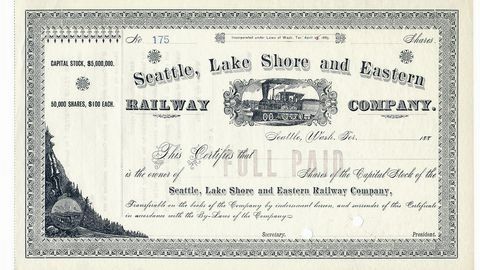
A share makes you a part-owner of a business. Here is what that ownership includes, what it does not, and why prices move both ways.
Independent investing education · No ads · No affiliate links · Not financial advice
Stocks
A share makes you a part-owner of a business. Here is what that ownership includes, what it does not, and why prices move both ways.

Funds & ETFs
An exchange-traded fund holds a basket of investments like a mutual fund but trades like a stock. Here is how shares come into existence, how you buy them, and the small costs that come with trading.

Markets & Economy
"The market" in the news is usually an index. Here is what an index measures, and why the way it is weighted changes what it tells you.
Funds & ETFs
Portfolio Building
Personal Finance
Investor Protection
Personal Finance · 6 min
Stocks · 5 min
Funds & ETFs · 7 min
Portfolio Building · 5 min
Investor Protection · 7 min
Shares, dividends, valuation and how companies report results.

Stocks
Most of the time you are not buying from the company at all. You are buying from another investor, through a broker, at a price set by the bid and the ask.
Stocks
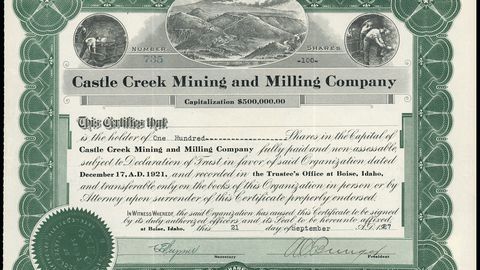
Both are shares of ownership, but they make a different deal with you. Common stock offers votes and open-ended upside; preferred stock offers a place ahead in the dividend line.
Stocks
A dividend is part of a company's profit paid out to shareholders. Whether you get it depends on one date, and what it is worth depends on the price you paid.

Stocks
The P/E ratio tells you how many dollars investors are paying for each dollar of a company's yearly profit. It is a starting point for comparison, not a verdict.
Mutual funds, ETFs, index funds and what they cost.

Funds & ETFs
One purchase can give you a slice of hundreds of stocks or bonds. Here is how a mutual fund is priced once a day, why the same fund comes in different share classes, and what a load is.

Funds & ETFs
They can hold the very same investments. The differences are in how you buy them, when the price is set, which fees apply and how often they pass taxable gains to you.

Funds & ETFs
A fund's fees are quoted in fractions of a percent, so they look tiny. Over decades they compound like returns do — just in the wrong direction. Here is every fee to look for and what it can cost.

Funds & ETFs
The prospectus is the fund's official disclosure document. It looks long, but the summary section at the front follows the same order for every fund — once you know the order, you can read one in minutes.
How lending to governments and companies works, and what moves bond prices.
Bonds & Cash
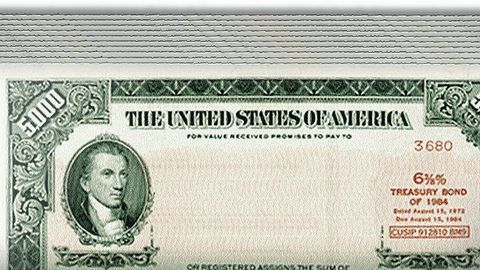
Buying a bond means lending money on written terms. Here are the five words that describe every bond, a worked example of the cash it pays, and what can go wrong.

Bonds & Cash
An old bond's coupon is fixed. When new bonds pay more, the old one has to get cheaper to compete. Here is the mechanism, the math and the one number — duration — that sizes the effect.

Bonds & Cash
All three are loans to the US government. The difference is how long you lend for and how you are paid. Here are TreasuryDirect's own terms, checked on 2026-10-03.

Bonds & Cash
One bond can show three different percentages. They answer three different questions. Here is what each one measures and how to calculate it.
Indexes, interest rates, inflation and how trading actually happens.
Markets & Economy
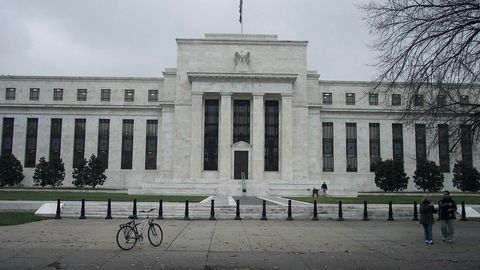
Rate decisions move markets because they change what future money is worth today. Here is the chain from the Fed's meeting room to a share price — without any forecast.
Markets & Economy
Inflation quietly changes what your money can buy. Here is how the official US measure is built, how to read it, and why investors care about "real" returns.

Markets & Economy
Two animal labels for the market's long swings. Here is what they mean, how the numbers work, and why the labels are only clear in hindsight.

Markets & Economy
Prices swing every day. Here is how to measure those swings, what happens when they get extreme, and why a calm plan matters more than a forecast.
| Index | Provider | Weighting |
|---|---|---|
| S&P 500 | S&P Dow Jones Indices | Float-adjusted market capitalization |
| Dow Jones Industrial Average | S&P Dow Jones Indices | Price-weighted |
| Nasdaq Composite | Nasdaq | Market capitalization |
| Russell 2000 | FTSE Russell | Float-adjusted |
| MSCI World Index | MSCI | Free float-adjusted market capitalization |
| FTSE 100 | FTSE Russell | Market capitalisation adjusted for free float and foreign ownership limits |
Methodology facts from each provider's documents, with sources on every profile. No live prices.
US retirement accounts, the rules behind them and how plans are built.
Retirement
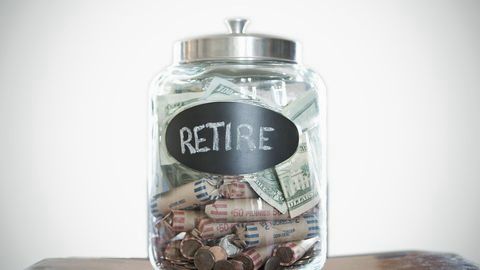
A 401(k) is a US workplace retirement plan. Here is how money gets in, how an employer match adds to it, when that match becomes yours, and the dollar limits the IRS set for tax year 2026.

Retirement
Tax-deferred US retirement accounts cannot grow untaxed forever. From age 73, under the current IRS rules, owners must withdraw a minimum each year — here is how the amount is worked out and what happens if you miss it.

Retirement
Target-date funds bundle stocks, bonds and other funds into one holding that grows more conservative as a chosen year approaches. They are convenient, but glide paths differ widely between funds, and no fund guarantees an outcome.

Retirement
There is no single right number. Most estimates chain together three rough steps: a share of pre-retirement income to replace, what Social Security might cover, and a withdrawal rate to turn the gap into a savings figure. Each step rests on assumptions you should see.
Allocation, diversification, rebalancing and the risks you take on.

Portfolio Building
Spreading your money lowers the damage any single company or category can do. It does not stop the whole market from falling. Here is the difference, with numbers.

Portfolio Building
Markets quietly change your mix of stocks and bonds. Rebalancing is how you put it back. Here is what drift looks like in numbers and the ways people correct it.

Portfolio Building
Investing the same amount every month buys more shares when prices are low and fewer when they are high. It can ease timing worries, but it does not prevent losses.

Portfolio Building
Two questions sit under every investing plan: how long until you need the money, and how much of a drop you can live with. Here is how to think about both.
The groundwork before investing: compounding, cash buffers, debt and taxes.

Personal Finance
Investments can fall just when you need cash. A separate pot of safe, easy-to-reach money keeps a car repair or a lost paycheck from turning into debt or a forced sale.

Personal Finance
Every extra dollar can shrink a debt or go into an investment. The comparison is simpler than it looks once you see one side is certain and the other is not.

Personal Finance
Most of the work happens before the first purchase. These are the checks U.S. regulators suggest, in order, with simple numbers to make each one concrete.

Personal Finance
When you sell an investment for more than you paid, the profit may be taxed. How long you held it changes the rate. Here are the US federal basics, using the IRS's figures for tax year 2025.
Checking who you deal with, spotting scams and knowing what is insured.

Investor Protection
Two free government-linked databases show whether someone is registered and what is on their record. Checking takes a few minutes and is the first defence against investment fraud.

Investor Protection
SIPC steps in when a US brokerage firm fails and customer assets are missing. It is not insurance against falling prices, and it works differently from FDIC deposit insurance.

Investor Protection
Borrowing to invest magnifies both gains and losses. Here is how the US margin rules work, what triggers a margin call, and how you can lose more than you put in.

Investor Protection
Investment advisers and brokers both have to act in your best interest in the US, but the duties are built differently. Knowing which one you are dealing with tells you what to ask.
Every calculator explains its formula and works through an example by hand.
Enter a starting amount, a monthly contribution, a yearly return and a number of years. The calculator shows how much of the final balance is your own money and how much is growth.
Two funds, the same investment, the same return before fees. The only difference is the yearly expense ratio — this calculator shows how far apart the ending values can drift.
Enter the share price, the size of each dividend payment and how often it is paid. Add your share count to see what that dividend would mean in dollars per year.
Two numbers in, two numbers out: the price-to-earnings ratio and the earnings yield. Here is what each one measures and where the ratio stops being useful.
A bond's coupon rate is fixed, but its price is not. This calculator shows what that price does to the two yields people quote most: current yield and yield to maturity.
Enter your age, the age you plan to retire, what you have saved and what you add each month. The calculator shows a balance at retirement, then shrinks it back into today's dollars so the number means something.
Short definitions with a worked example for every term.
78
explainers, glossary terms, calculators and index profiles
219
distinct sources cited, led by regulators and index providers
0
ads, affiliate links or paid placements — see how we are funded
[n]
every figure carries a numbered citation you can click